
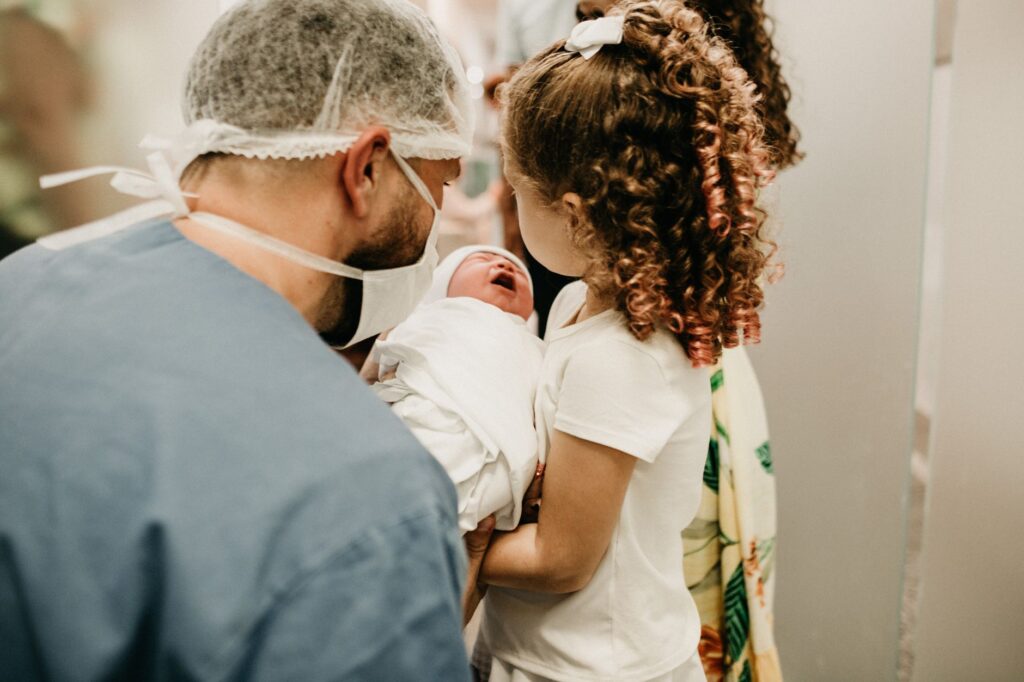
Webinar: Welcoming a New Baby: Supporting Siblings and Families Through the Transition
A new baby can bring joy and excitement to the family, but it can also bring uncertainty and a need for extra reassurance for older siblings. Children may respond to the news of a new baby in different ways depending on their age, developmental stage, temperament, and family dynamics.
For Hospital Liaisons in the Welcome Baby program, recognizing the older sibling’s experience is an important part of supporting the family as a whole during this transition.
In an LA Best Babies Network-hosted webinar on August 13, 2026 — for Hospital Liaisons and other staff of our network’s home visiting organizations and Welcome Baby hospitals — Kathrin Auger, retired pediatric registered nurse and doula, discussed:
- Common emotional and behavioral responses older siblings may experience when adjusting to a new baby, and why these reactions are developmentally typical.
- Practical, age-appropriate strategies to help prepare older children for a new sibling and support a smoother transition after the baby arrives home.
- Supportive, nonjudgmental language that normalizes parents’ concerns and builds confidence during bedside conversations.
- The difference between expected sibling adjustment behaviors and signs that may indicate a child or family could benefit from additional support or a referral to a specialist.
- Community resources and referral options that can be shared with families when concerns extend beyond typical sibling adjustment.
- Common parent questions about sibling adjustment within the time-limited bedside setting.
The first days and weeks after a new baby are an opportunity to help the older sibling feel that they still have an important place in the family. Some helpful ideas:
- Make the first greeting about connection. Have another trusted adult hold the newborn so the parent can greet the older child with their full attention. The older sibling can also bring a small “gift” for the new baby, helping them feel included in this special moment.
- Offer small, helper roles. The older sibling can bring a diaper, sing to the baby, or help choose an outfit.
- Protect one-on-one time. Even 10–15 minutes of focused attention each day can create an opportunity for connection with the older sibling.
- Help visitors acknowledge the older sibling. Encourage family and friends to greet the older child before focusing on the newborn.
By helping parents understand their older child’s reactions and offering simple, age-appropriate strategies, professionals can encourage a more supportive transition for everyone.
This webinar was not recorded, but see the slides and other resources below.
About the presenter:
Kathrin Auger, a retired NICU RN, CD/PCD/PDT (DONA), started her training as a pediatric registered nurse in Switzerland in 1993, where she worked in the NICU at one of the leading university hospitals for several years. During her years in the NICU, she expanded her training in infant massage, baby wearing, reflexology, kinesthesia (conscious handling of the newborn), lactation, homeopathy, and flower essences, which broadened her expertise in the maternity field. Her work also included the supervision of pediatric nurses and midwife interns.
Kathrin’s years of conventional medical training fed her desire to step outside the typical medical model and go deeper into more personal care during the perinatal period. After her move to Los Angeles in 2002, she became a certified birth and postpartum doula, as well as a postpartum doula trainer.
Beyond her many certifications, Kathrin is recognized as an expert in the postpartum field. Her passion for all things pregnancy, birth, and postpartum knows no bounds, and she strongly believes in a culture where birth is just, inclusive, and free of fear, and where families get the support they need to thrive in the ever-changing landscape of the postpartum period.
Related resources:
- Slides for this presentation
- Preparing Children for the Arrival of the New Baby (LABBN Parenting Resource Library in English & Spanish)
- The Welcome Baby Book in English & Spanish has information on getting children ready for a new baby & sibling relationships. See:
- Chapter 2: Emotional Health During Pregnancy
- Chapter 8: Growth and Development